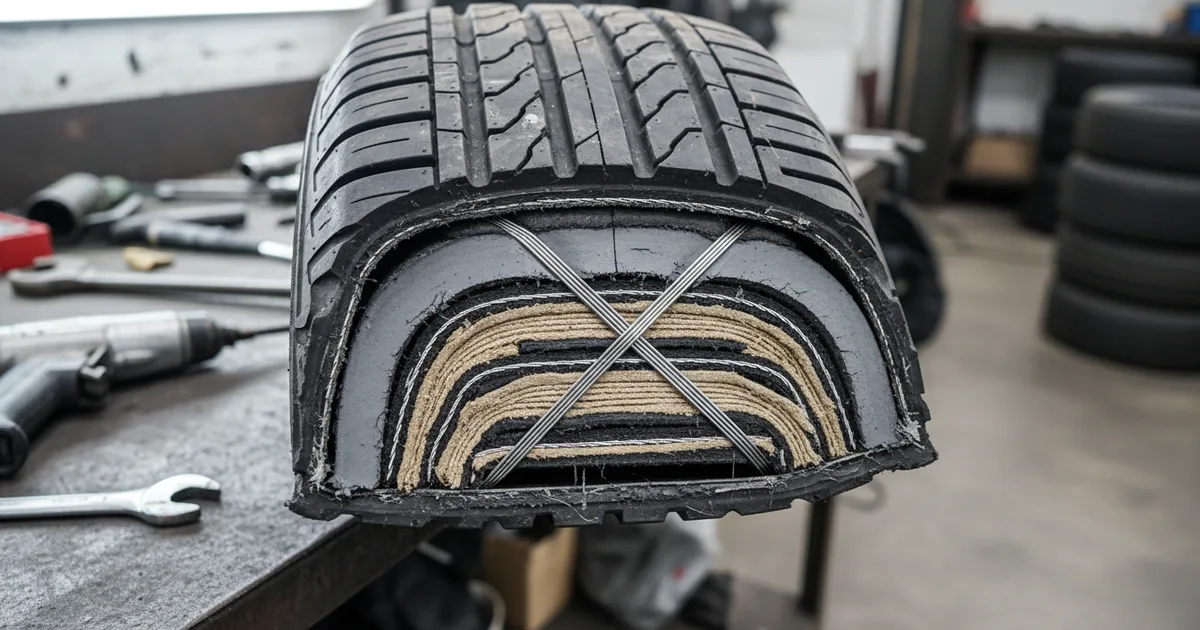
Ask most drivers what a tyre is made of and the answer is "rubber." That's true, but it's a fraction of the story. A typical modern tyre contains more than 100 separate ingredients, and some premium tyres push past 200. What looks like a simple black hoop of rubber is closer to a small piece of engineering than a lump of moulded material.
Rubber is just the start
Every tyre uses both natural rubber and synthetic rubber, and the two do different jobs. Natural rubber, tapped from rubber trees, gives flexibility and resistance to tearing. Synthetic rubber is engineered for specific properties such as heat resistance and wear. Blending the two lets manufacturers tune a tyre for grip, durability and rolling resistance rather than relying on one material to do everything.
Carbon black and silica: the reinforcing fillers
On their own, rubber compounds would wear down fast and lack strength. That's where carbon black and silica come in. Carbon black is mixed through the rubber to improve strength, abrasion resistance and resistance to UV damage, which is also why tyres are black rather than the natural pale colour of raw rubber. Silica is used alongside it in many modern compounds to improve wet grip and reduce rolling resistance, which matters when you're driving through standing water on an A-road in the middle of a Perthshire downpour.
Steel and fabric: the skeleton inside the rubber
Cut a tyre in half and the rubber is really just the skin. Underneath it there's a structure of steel and textile that does the heavy lifting. Steel belts run around the tyre under the tread to resist punctures and keep the tread flat against the road under load. Polyester and nylon cords form the body plies, giving the tyre its shape and letting it flex thousands of times a minute without failing. Some higher-spec tyres also use Kevlar, the same material used in body armour, for extra cut and puncture resistance in the sidewall or tread area. None of this is visible from the outside, but it's the reason a tyre can carry the weight of a car at motorway speed for tens of thousands of miles without falling apart.
The chemistry that holds it all together
Rubber, steel and fabric wouldn't stay bonded together without a set of chemical processes going on behind the scenes. Oils and resins are added during manufacturing to help process the rubber and improve how the compound behaves at different temperatures. Sulphur and zinc compounds are used in vulcanisation, the curing process that turns raw, sticky rubber into the durable, elastic material that can grip a wet road at speed and still spring back into shape. Without vulcanisation, a tyre would behave more like a lump of uncured rubber, soft, unstable and useless under load.
Why over 100 ingredients matters to you
All of this adds up to a genuinely complex product. A typical tyre has over 100 ingredients, and premium tyres can use over 200, each one there to solve a specific problem: grip in the wet, resistance to punctures, stability at speed, or simply lasting longer before the tread wears down. That complexity is also why tyres degrade over time even when they look fine. The oils and resins that keep the rubber flexible break down gradually, and a tyre sitting on a driveway for years will harden and crack long before the tread wears out. Age, not just mileage, is part of the story.
It also explains why a cheap tyre and a premium tyre from the same size and spec can behave very differently on the road, particularly on the kind of mixed surfaces you get across Tayside, Perthshire and Fife, from motorway stretches to wet, twisting back roads. The ingredient list barely changes, but the ratios, the grade of each material and how carefully they're compounded together do, and that's what separates a tyre that grips confidently in the rain from one that doesn't.
If you're not sure what's actually going on with the tyres on your car, whether that's checking for age-related cracking, uneven wear, or just getting a straight answer on what you're paying for, we'll come to you and take a proper look. Our mobile fitting service means you don't need to book a garage slot or sit in a waiting room to get it sorted, we do it at your home or work, wherever your car is parked.