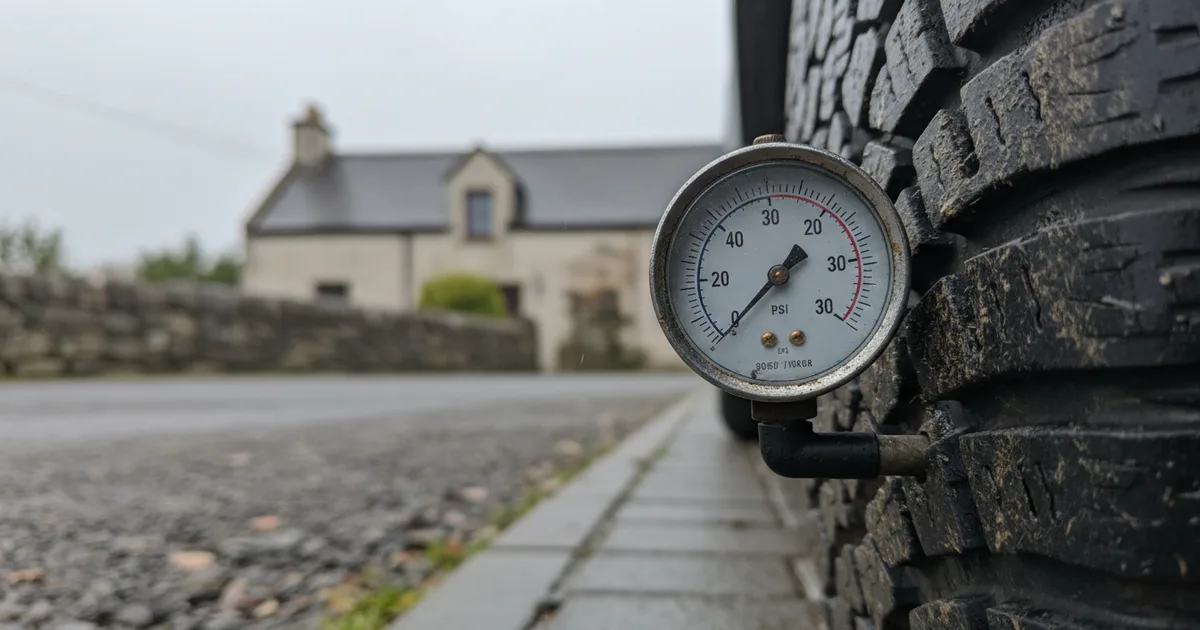
Why tyre pressure matters here
Tyre pressure is one of the simplest checks a driver can do, but it is also one of the most ignored. Around Dundee, Perthshire and Fife, roads can change quickly from town streets to fast A roads, rural lanes, wet hills and rough surfaces. If your tyres are not sitting at the right pressure, the car will not brake, steer or wear as it should.
Low pressure makes the sidewall flex more than it was designed to. That creates heat, increases fuel use and can wear the shoulders of the tyre early. High pressure can reduce the contact patch, which may mean less grip and a harsher ride. Neither is ideal, especially in heavy rain, on winter mornings or after hitting potholes on damaged roads.
Check pressures when tyres are cold
The best time to check tyre pressure is when the tyres are cold. That means before a long drive, or after the car has been parked for a few hours. Tyres warm up as you drive, and warm air expands, so a reading taken after a motorway run can be misleading.
You will usually find the correct pressure on a sticker inside the driver door frame, inside the fuel flap, or in the vehicle handbook. Many cars have more than one setting. There may be a normal load pressure and a higher pressure for a full car, roof box, caravan or heavy boot. Use the setting that matches how the car is being used.
How often should you check?
As a rule, check tyre pressure at least once a month and before any long trip. For local drivers, that might mean before heading from Dundee to Perth, across to St Andrews, up the A9, or out into rural Perthshire where phone signal and safe stopping places can be limited.
It is also worth checking after a sharp change in temperature. Cold weather can drop pressure enough to affect handling. A tyre that was fine in mild autumn weather can be low on the first proper frosty morning. That does not always mean there is a puncture, but it does mean the tyre needs topping up and watching.
Do not rely only on the warning light
Many newer cars have a tyre pressure monitoring system, often called TPMS. It is useful, but it is not a replacement for checking with a gauge. Some systems only warn after a clear drop in pressure. Others compare wheel speeds, so they may not spot all four tyres slowly losing pressure at the same rate.
If the TPMS light comes on, do not ignore it. Pull over somewhere safe, check the tyres visually, then check the pressures as soon as you can. If one tyre is much lower than the rest, there may be a puncture, leaking valve, cracked wheel or bead leak.
Watch for pothole damage
Potholes are a common cause of tyre and wheel problems across Tayside, Perthshire and Fife, especially after winter. A heavy impact can pinch the tyre against the rim, damage the inner structure, bend the wheel, or knock the tracking out. Sometimes the tyre still holds air, but the damage shows later as a bulge, vibration or slow pressure loss.
After a hard hit, check the tyre sidewall for cuts, lumps or cracking. Look at the wheel rim for bends. If the steering wheel sits off centre, the car pulls to one side, or you feel vibration at speed, get it checked. If the tyre is flat or you are not sure it is safe to drive, a local mobile tyre fitting callout can save you from risking further damage on the road.
Adjust for loads and longer journeys
Tyres work harder when the vehicle is loaded. A family trip, tools in the van, camping kit, building materials or a full boot can all change how much pressure is needed. If you run fully loaded on normal light-load pressures, the tyres can overheat and wear quickly.
Before a longer journey, set the pressures to the loaded figure if your vehicle handbook says to. When you return to normal use, bring them back down to the standard setting. Do not guess. The correct figures are there because the vehicle manufacturer has tested them.
Check tread at the same time
Pressure and tread should be checked together. The UK legal minimum tread depth is 1.6mm across the central three quarters of the tyre, all the way around. That is the law, but in wet Scottish weather, many drivers choose to replace tyres before they get that low. Less tread means less ability to clear water, which can increase stopping distance and the risk of aquaplaning.
Look for uneven wear too. Wear on both outer edges can point to underinflation. Wear in the centre can point to overinflation. Heavy wear on one side can suggest tracking or suspension issues. Spotting that early can save a tyre before it is ruined.
Do not forget the spare
If your car has a spare wheel, check its pressure as well. A spare that has sat under the boot floor for years may be flat when you need it most. Space saver spares normally need a much higher pressure than standard tyres, so read the label carefully.
If your car has a sealant kit instead of a spare, check the expiry date on the bottle and make sure the compressor is still in the vehicle. Sealant is not suitable for every puncture, especially sidewall damage or large holes, so it is not a guaranteed fix.
A simple routine that works
Pick a regular day each month to check all four tyres and the spare if fitted. Check pressure cold, inspect tread, look for nails, cuts and sidewall bulges, then reset TPMS if your car requires it. It takes a few minutes, but it can improve grip, reduce wear and help prevent avoidable breakdowns.
For drivers in Dundee, Perthshire, Fife and the surrounding areas, tyre pressure is not just a fuel economy detail. It is part of keeping the car stable on wet roads, rough edges, rural lanes and busy commuter routes. Keep the pressures right and the tyres have a much better chance of doing their job properly.