What actually goes into a new tyre
Most drivers pick a tyre off a shelf, or these days off a screen, and the decision comes down to one number: the price. Fair enough. A tyre looks like a simple product, a ring of black rubber that does one job. What that view misses is the amount of work that goes into getting that ring of rubber to do its job properly, in the wet, in the cold, under braking, at speed, for tens of thousands of miles, without falling apart.
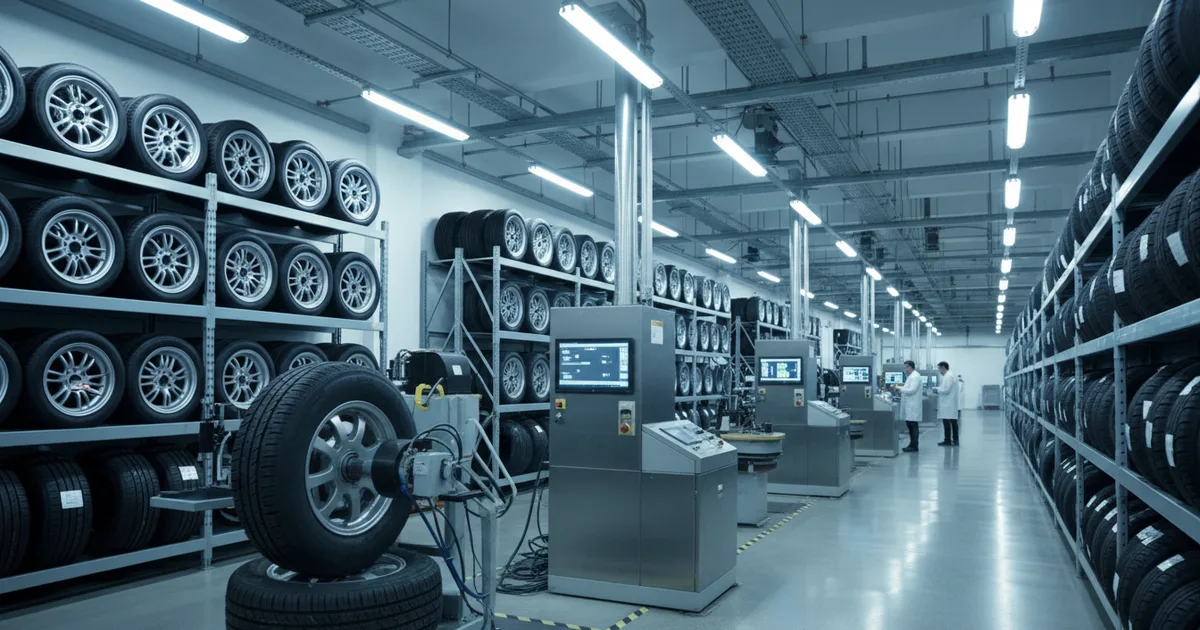
A premium manufacturer such as Michelin, Continental or Bridgestone can spend hundreds of millions of pounds developing a single tyre design. That figure covers thousands of computer simulations modelling how a tread pattern behaves under load, how a compound flexes at different temperatures, how a sidewall responds to a pothole strike. It also covers hundreds of physical prototypes, built and rebuilt as engineers chase small gains in grip, wear rate and rolling resistance. Then comes the testing: millions of miles of it, on test tracks and public roads, in climates from Arctic cold to desert heat, before that tyre is signed off for sale.
Why the process takes that long
None of that spend is decoration. A tyre has to manage conflicting demands at the same time. Softer compounds grip better but wear faster. Stiffer sidewalls handle better but transmit more road noise and a harsher ride. Deeper tread channels water away in the wet but can reduce dry-road stability. Every finished tyre is a set of compromises, and the R&D budget is largely spent finding the best possible version of that compromise for the tyre's intended use, whether that's a budget commuter tyre, a winter tyre, or something built for a performance car.
The simulation stage narrows down thousands of possible tread and compound combinations to a shortlist worth building. The prototype stage turns that shortlist into real, physical tyres that can be mounted and driven. The testing stage is where theory meets the road, literally, and it's also where a lot of designs get sent back for further work. A tyre that performs well in a lab but struggles on a wet motorway slip road doesn't make it to production, no matter how much money has already gone into it.
What it means for the tyres on your car
Understanding this doesn't mean every driver needs to buy the most expensive tyre on the rack. Budget and mid-range tyres go through their own, smaller-scale development process, and plenty of them are perfectly good for daily driving. But it does explain why two tyres that look similar in a shop can perform very differently once they're actually on a car, particularly in the wet braking distances and steering response that matter most on the roads around Dundee, Perth and Fife, where a decent stretch of the year is spent driving on standing water, road spray or black ice rather than dry tarmac.
It's also a reminder that the tyre itself is only half the equation. A well-engineered tyre fitted at the wrong pressure, or left to run on worn tread, gives up most of the advantage that all that R&D was supposed to deliver. Correct fitting, torque and pressure checks matter as much as the tyre choice itself, which is one of the reasons we build those checks into every callout rather than treating fitting as a five-minute bolt-on job. If you're getting new tyres fitted at home, at work, or on the roadside, our mobile fitting service covers that properly, on your drive or wherever you've stopped, rather than rushing the fit to get to the next job.
The next time you're choosing between two similarly priced tyres, it's worth remembering that the sticker price rarely reflects the years of simulation, prototyping and testing that sit behind the compound and tread pattern in front of you. That work is invisible once the tyre is on the car, but it's the reason a well-developed tyre stops you shorter in the wet and lasts longer than one that skipped a few of those steps to hit a lower price point.