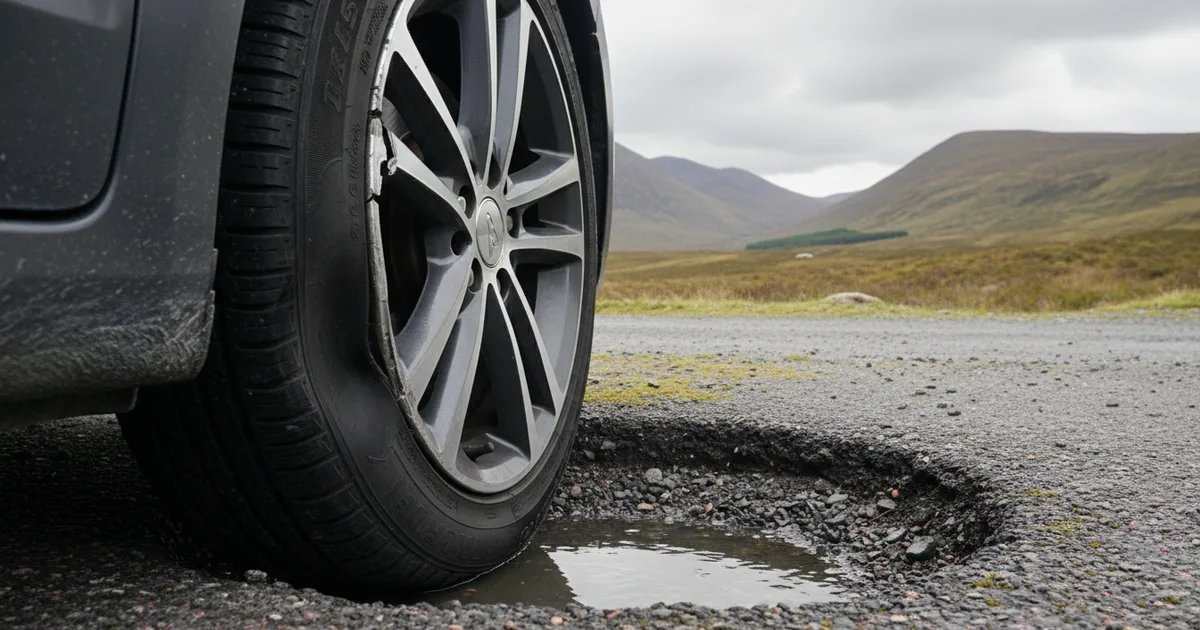
Potholes are hard on tyres
Drivers across Tayside, Perthshire and Fife know the feeling. You hit a pothole, hear the bang, then spend the next mile wondering if the tyre has survived. After wet weather, frost, heavy traffic and roadworks, potholes can open up quickly on town streets, country roads and fast A roads.
A pothole impact can damage more than the tyre. It can mark the alloy, bend a wheel, knock the tracking out, or damage suspension parts. Some faults show straight away. Others take a few days to become obvious. That is why it is worth checking the tyre properly after any hard hit, even if the car still feels normal.
Stop safely and look at the tyre
If you hit a pothole hard, do not stop in a dangerous place. Find a safe lay-by, side street, car park, or wide verge. Put your hazards on if needed and keep clear of moving traffic. Once it is safe, start with a visual check of the tyre that took the impact.
Look for cuts, bulges, splits, torn rubber, or cords showing through. A bulge in the sidewall is a serious warning sign. It means the tyre structure may have been damaged inside. A tyre with a sidewall bulge should not be driven on unless there is no safe alternative, and even then only to get out of danger.
Check both the outside and inside edges if you can. The inside sidewall is easy to miss, but it often takes the force of the impact. Turn the steering to give yourself a better view on the front wheels. Use your phone torch if it is dark.
Check the wheel, not just the rubber
A tyre can look fine while the wheel has taken a knock. Look around the rim for dents, cracks, missing chunks, or fresh scuff marks. A bent rim may let air escape slowly, which can leave you with a flat tyre later in the day or the next morning.
If you have alloy wheels, cracks are not always easy to spot at the roadside. Steel wheels can bend and still hold air for a while. If the steering wheel starts shaking, the car pulls to one side, or you hear a new vibration, the wheel or balancing may have been affected.
Watch for slow punctures after the impact
Not every pothole strike causes an instant flat. Sometimes the tyre loses air slowly through a damaged valve, bead seal, rim dent, or small split. If your car has a tyre pressure monitoring system, it may warn you within a few miles. Older vehicles may give no warning at all.
After a heavy impact, check the tyre again later that day and the next morning. If one tyre looks softer than the others, do not ignore it. A slow puncture can overheat the tyre, damage the sidewall, and turn a repairable problem into a replacement tyre.
Listen and feel while driving
Once you are moving again, pay attention to how the car feels. A new pull to the left or right can mean wheel alignment has been knocked out. A thumping noise can point to tyre damage. A vibration through the steering wheel can mean a bent wheel, damaged tyre, or lost wheel weight.
On roads around Dundee, Perth, Cupar, St Andrews and the rural routes between, it is easy to blame rough surfaces for new noises. If the noise started straight after the pothole hit, get it checked. Driving on a damaged tyre at higher speeds is not worth the risk.
Know when not to drive on
Do not carry on driving if the tyre is flat, the sidewall has a bulge, cords are visible, the rim is badly bent, or the vehicle feels unsafe. Pull over safely and arrange help. Driving on a flat tyre can destroy the tyre, damage the wheel, and make the car harder to control.
If you are stuck at home, work, roadside, or in a car park, a mobile tyre fitter can come to you. The Tyre Soldier covers Dundee, Tayside, Perthshire and Fife with on-site tyre help, including replacement tyres where repair is not safe. You can see more about our service here: mobile tyre fitting.
Can pothole tyre damage be repaired?
It depends on where the damage is and how bad it is. A simple puncture in the central tread area may be repairable if the tyre meets repair rules and has enough tread. Sidewall damage, bulges, exposed cords and impact breaks are not repairable. Those faults weaken the tyre structure.
Tyre repairs are not just about plugging a hole. A proper repair needs the tyre inspected inside. If the inside wall has been damaged from running underinflated or from the impact itself, it needs replacing. A quick guess from the outside is not good enough when safety is involved.
Keep an eye on tread after a hard hit
Pothole damage can also affect tyre wear. If the wheel alignment is knocked out, one edge of the tyre may start wearing faster than the rest. That can shorten the life of a good tyre and may take it close to the legal limit before you notice.
The legal minimum tread depth for cars in the UK is 1.6mm across the central three quarters of the tyre and around the full circumference. In our weather, especially on wet rural roads and busy routes like the A90, A92 and A9, it is sensible to act before tyres are down to the bare minimum.
A quick checklist after hitting a pothole
When it is safe, check for a flat tyre, sidewall bulges, cuts, rim dents, vibration, pulling, warning lights and slow air loss. If anything looks wrong, get it checked before doing a long journey. Pothole damage can be minor, but it can also be the start of a tyre failure. A few minutes checking now can save a breakdown later.