Most drivers never think about how their tyres are built. They think about tread, price and whether the car will get through its MOT. But there was a point in tyre history where the internal construction of a tyre changed more about driving than almost any single innovation before or since, and it is worth understanding, because it explains why every tyre on your car today behaves the way it does.
The bias-ply years
Before the 1940s, nearly every tyre fitted to a car used bias-ply construction. In a bias-ply tyre, the fabric plies inside the tyre run diagonally, crossing each other at an angle from bead to bead. It was a workable design and it got cars through the early decades of motoring, but it had real limitations. Bias-ply tyres flexed more as they rolled, generated more heat, wore faster and gave a stiffer, less predictable ride than what came later. Drivers of the time simply accepted this as normal, because there was nothing else to compare it to.
Michelin's radial breakthrough
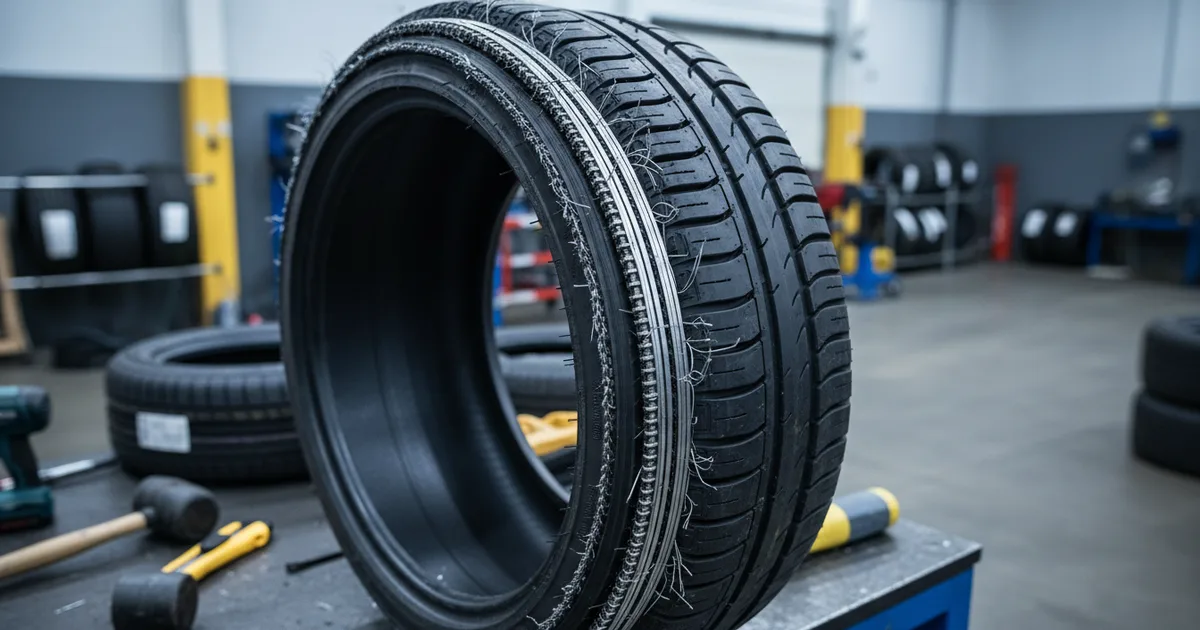
That changed when Michelin introduced the radial tyre. Instead of criss-crossing plies, a radial tyre has its body plies running radially, straight across from bead to bead, with a separate stabilising belt package sitting under the tread. That structural change sounds small on paper. In practice it altered almost everything about how a tyre performs.
Radial construction brought lower rolling resistance, which translates directly into better fuel economy, since less energy is wasted flexing the tyre as it turns. It brought better grip, because the tread stays flatter and more consistent against the road surface through corners. It brought longer tyre life, since the structure manages heat and wear more evenly across the tread. And it brought a noticeably more comfortable ride, with less harshness transmitted into the cabin over rough surfaces.
Why this mattered beyond the workshop
It is easy to underestimate how significant this shift was, because it happened gradually and quietly, tyre by tyre, rather than as a single dramatic event. But in terms of impact on everyday driving, the move from bias-ply to radial construction sits alongside fuel injection and ABS as one of the changes that genuinely reshaped what a car could do and how safely it could do it. Fuel injection changed how engines delivered power. ABS changed how cars stopped. Radial tyres changed how the car actually connected to the road in every single condition, wet or dry, motorway or backroad.
That connection to the road matters just as much on the routes we cover every day around Tayside, Perthshire and Fife. Local driving here means a mix of fast dual carriageway, tight rural bends, and a lot of weather, rain, standing water, and winter frost on quieter roads that do not always get gritted first. A tyre that grips consistently and sheds heat properly is not a luxury on those roads, it is what keeps a car predictable when the surface changes underneath it without warning.
Where things stand today
Today virtually every passenger car tyre on the road is a radial. Bias-ply tyres still exist in some specialist and heavy off-road applications, but for ordinary cars and vans the radial tyre has been the standard for so long that most drivers assume it is simply what a tyre is, rather than a specific engineering choice that won out over an older design. It is a good reminder that a lot of what feels like a basic, unremarkable part of a car, the tyre sitting quietly at each corner, actually carries decades of engineering behind it.
None of this history changes the basic maintenance a driver needs to do. Tread depth, pressure and general condition still matter regardless of construction type, and a radial tyre worn past its legal limit or run underinflated will let you down just as surely as an old bias-ply tyre would. If a tyre looks tired, is losing pressure, or you are simply not sure what condition it is in, it is worth getting it looked at rather than guessing. We cover call-outs across Tayside, Perthshire and Fife for exactly that kind of job, and our mobile fitting service means a fitter can come to your car wherever it is parked, rather than you having to find time to get it into a garage.
The radial tyre is a good example of how the most important improvements in driving are not always the flashy ones. Nobody points at a car and says "look at those radial tyres" the way they might admire a new engine or a styling change. But every time a car grips through a wet bend, or a driver gets a bit more distance out of a tank of fuel, or a set of tyres lasts another few thousand miles longer than it used to, that quiet improvement from decades ago is still doing its job.