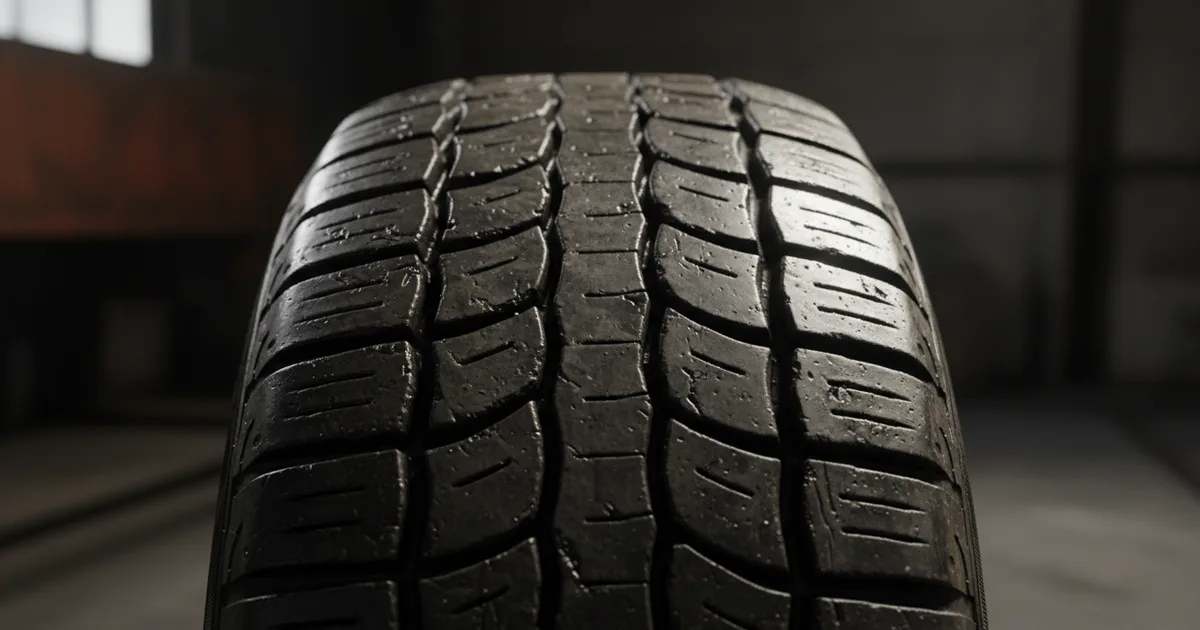
The bit of engineering nobody thinks about
Most drivers think about their tyres twice: once when they buy the car, and once when a warning light comes on. In between, four patches of rubber roughly the size of a hand each are doing something remarkable every single second the car is moving. They are failing, in a controlled way, on purpose, and getting away with it for tens of thousands of miles.
That sounds dramatic, but it is the honest description of how a tyre works. Grip is not generated by rubber sitting still on the road. It is generated by the tyre constantly deforming: stretching as it takes a corner, compressing under the weight of the car, heating up from the friction of doing both, and slowly wearing away with every single rotation. A tyre that is not deforming is a tyre that is not gripping. The two are the same process.
Right on the edge, and staying there
Engineers building a tyre are not trying to make something indestructible. They are trying to make something that operates permanently at the edge of destruction and still holds together for years of ordinary driving. Every rotation stretches the rubber compound and the internal structure underneath it a little further than the last, then lets it spring back, then does it again a moment later. Multiply that by the number of times a wheel turns on a run from Dundee out to Perth and back, and the number of individual deformation cycles a single tyre survives runs into the millions.
Heat is part of the same equation. Bending rubber generates heat, and heat is what allows the compound to grip rather than just skid. Too little heat and the tyre is hard and slippery. Too much and the compound breaks down faster than it should. A tyre spends its whole working life balanced between those two states, and it manages that balance without any input from the driver at all.
Wear is the receipt, not the fault
The tread wearing down is not a design flaw. It is the visible evidence that the tyre has been doing exactly what it was built to do. Every stretch and compression cycle takes a microscopic amount of material off the surface. That is unavoidable, and it is by design: a compound soft enough to grip well is a compound that will eventually wear away. The engineering achievement is not making a tyre that never wears. It is making one that wears slowly and predictably enough that a driver gets tens of thousands of miles of that constant edge-of-failure performance before the tread runs out.
It is worth sitting with how under-appreciated that is. Nobody stands at the school gates or in a supermarket car park thinking about the fact that the only thing between their car and the road surface is four palm-sized contact patches of rubber, each one flexing and heating and wearing with every wheel rotation, all day, every day. Most drivers never think about it at all, right up until a tyre lets go, and by then the controlled failure has become an uncontrolled one.
Why Tayside, Perthshire and Fife roads make the point
The routes around here are not gentle on that balancing act. A drive from Dundee up through Perthshire climbs and drops repeatedly, corners tighten on single-track stretches, and the road surface itself changes character from smooth A-road tarmac to patched, cambered rural lanes within a few miles. Every one of those inputs asks the tyre to deform differently: harder compression on the climbs, more stretch through the bends, extra heat generated on the twistier B-roads around Fife's coast. None of that is unusual for a tyre built to handle it. But it does mean the engineering margin gets used up a bit faster on a typical Perthshire commute than it would on a flat, straight motorway run, which is exactly why keeping an eye on tread and condition matters more here than the driver's manual would suggest.
What that means day to day
None of this requires a driver to become an engineer. It just means treating tyres as the actively working component they are, rather than a fitted part that only needs attention when something goes wrong. A quick look at tread depth, an eye on uneven wear across the width of the tyre, and getting a tyre swapped out before it is pushed past its edge rather than after, are the practical version of respecting what is actually happening at each corner of the car. When a tyre does need replacing, having it done at the roadside or driveway rather than working around a garage's opening hours is straightforward with mobile tyre fitting that comes to wherever the car is parked.
The next time a set of tyres gets changed, it is worth remembering what they were actually doing for the last however many thousand miles. Not sitting there. Working, right on the edge, the whole time.